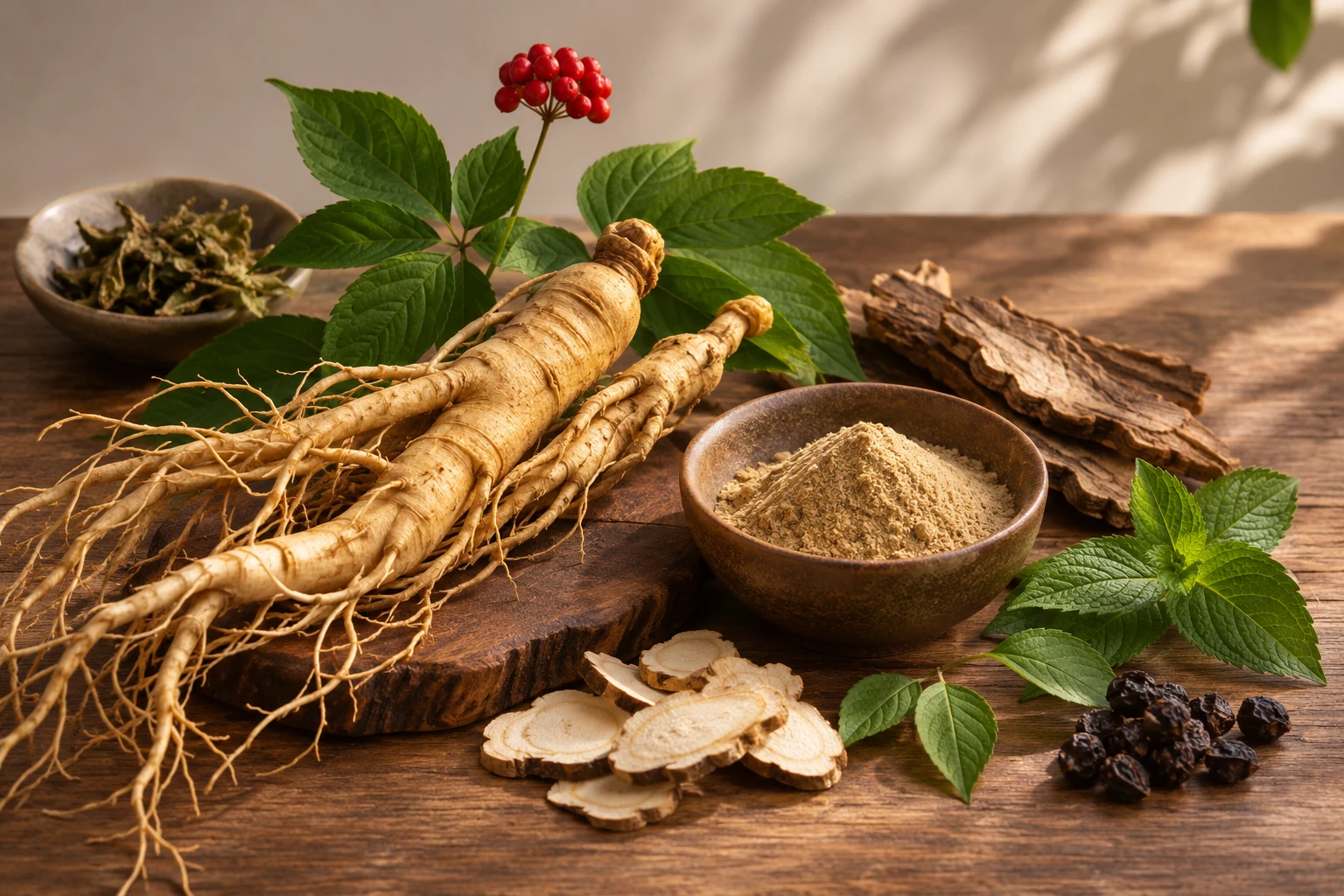
Tradition and research ask different questions
A plant's traditional use can explain its cultural importance and the questions researchers choose to explore. It does not by itself establish a clinical effect. This section considers botanical ingredients as a subject for careful reading, with attention to the gap between a familiar story, a laboratory finding, and a meaningful human outcome.
The preparation matters
A root used in cooking is not interchangeable with a concentrated extract. Plant species, processing, composition, and study conditions affect what a result can tell us. Ginger and ginseng are useful examples of why naming the ingredient is only the beginning of an explanation. Claims should identify exactly what was studied.
Read beyond the headline
Look for the number and characteristics of participants, the comparison group, the outcome measured, and the length of follow-up. A result involving general fatigue cannot automatically be presented as evidence about erections or testosterone. Small early studies may justify more research while leaving practical questions unresolved.
Food and products are different conversations
Everyday foods can contribute nutrients without needing a claim about sexual performance. Concentrated products raise additional questions about composition, interactions, and adverse effects. Our reading route connects botanical research literacy with the wider nutrition section, keeping ordinary food patterns distinct from claims about a capsule or proprietary formula.